
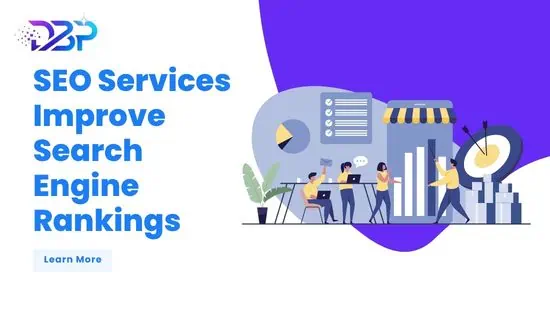
How Do SEO Services Improve Search Engine Rankings?
Search engines have become the primary way people discover businesses, products, and services online. Whether someone is looking for a local restaurant, a software solution, or a digital marketing agency, they usually begin with a Google search. Understanding How SEO Services Improve Search Engine Rankings is essential for businesses that want to increase their online visibility, attract qualified traffic, and achieve sustainable growth.
SEO, or Search Engine Optimization, is more than simply adding keywords to a webpage. It is a long-term digital marketing strategy that improves a website’s relevance, authority, technical performance, and user experience. By following Google’s best practices, businesses can increase their chances of appearing on the first page of search results, where most users click.
At Digital Business Promotion, we believe successful SEO starts with understanding both search engine algorithms and user intent. Rather than chasing short-term ranking tricks, DBP focuses on ethical, data-driven SEO strategies that help businesses build lasting online authority while delivering valuable experiences for their audiences.
What Are SEO Services?
Many business owners ask, what are SEO services, especially when they are trying to improve their online presence. Simply put, SEO services are professional strategies and techniques designed to help websites rank higher in search engine results. These services focus on making a website more relevant, accessible, and trustworthy for both search engines and users.
A complete approach to SEO services explained includes technical improvements, keyword research, content optimization, website audits, user experience enhancements, and authority building through quality backlinks. Instead of relying on a single tactic, professional SEO combines multiple elements that work together to improve search visibility over time.
Search engines evaluate thousands of factors before determining which pages deserve top rankings. SEO services help businesses align their websites with these ranking factors while creating content that answers users’ questions accurately and effectively.
Professional SEO services generally include:
- Comprehensive SEO audits
- Keyword research and search intent analysis
- On-page SEO optimization
- Technical SEO improvements
- Content creation and optimization
- Internal linking strategies
- High-quality link building
- Local SEO optimization
- Performance monitoring and reporting
Each service plays a unique role in helping websites compete within increasingly competitive search results.
Why Do Businesses Invest in SEO Services?
Businesses invest in SEO because it delivers long-term value rather than temporary visibility. Unlike paid advertising, which stops generating traffic when the budget ends, organic rankings can continue attracting visitors for months or even years with proper maintenance.
Another reason organizations prioritize SEO is that users generally trust organic search results more than advertisements. Appearing naturally in search results helps establish credibility while attracting visitors who are actively searching for relevant products or services.
Some of the biggest reasons businesses choose SEO include:
- Higher organic website traffic
- Improved online visibility
- Better brand credibility
- Increased lead generation
- Higher conversion opportunities
- Sustainable long-term growth
- Better return on marketing investment
When SEO is implemented correctly, it becomes one of the most valuable digital marketing investments a business can make.
How Does SEO Work?
To understand successful optimization, it’s important to know how SEO works. Search engines like Google use sophisticated algorithms to discover, analyze, and rank billions of webpages. Their primary goal is to deliver the most relevant, trustworthy, and helpful results for every search query.
SEO works by optimizing a website so that search engines can easily understand its content while ensuring visitors receive a positive experience. Rather than focusing on one ranking factor, SEO combines technical improvements, quality content, and authority signals into a comprehensive strategy.
The SEO process generally involves several key stages:
- Researching relevant keywords and user intent
- Creating valuable, original content
- Optimizing titles, headings, and metadata
- Improving website speed and mobile usability
- Building logical internal links
- Earning authoritative backlinks
- Monitoring performance and making ongoing improvements
Because search algorithms continually evolve, SEO is an ongoing process rather than a one-time project. Regular updates and optimization help businesses maintain and improve their rankings over time.
What Are the Main Types of SEO?
Professional SEO is typically divided into several specialized areas, each contributing to overall search performance. Together, these areas create a strong foundation for long-term visibility.
The primary types of SEO include:
- On-Page SEO: Optimizing content, headings, keywords, images, and metadata.
- Technical SEO: Improving website speed, crawlability, indexing, security, and Core Web Vitals.
- Off-Page SEO: Building authority through quality backlinks and brand mentions.
- Local SEO: Helping businesses appear in local search results and map listings.
- Content SEO: Creating valuable, search-focused content that satisfies user intent.
A balanced SEO strategy incorporates all these areas rather than relying on just one optimization technique.
How Do Search Engine Rankings Work?
Understanding how search engine rankings work helps businesses appreciate why SEO requires both patience and expertise. Search engines use automated programs called crawlers to discover webpages across the internet. These pages are then analyzed, indexed, and evaluated based on hundreds of ranking signals before appearing in search results.
Google’s algorithms are designed to prioritize pages that provide the most accurate, trustworthy, and helpful information for users. Instead of rewarding websites that simply repeat keywords, modern search engines evaluate overall content quality, user experience, authority, and relevance.
Several important factors influence rankings, including:
- Content relevance to the search query
- Search intent satisfaction
- Website authority
- Technical website health
- Mobile responsiveness
- Page loading speed
- Internal linking structure
- High-quality backlinks
- Secure HTTPS connections
- Positive user experience signals
Because Google’s algorithms continue to evolve, businesses should focus on creating genuinely helpful content rather than attempting to manipulate rankings through outdated SEO tactics.
Unlock Higher Rankings with DBP SEO Services
Meet DBP to Rank Higher, Grow Faster and Build Your Brand Confidently.
Why Is User Intent Important for Search Rankings?
Modern SEO is no longer just about keywords—it is about understanding what users are actually looking for. Search engines analyze user intent to determine whether a webpage provides the best possible answer to a search query.
There are four common types of search intent:
- Informational: Users want to learn something.
- Navigational: Users are searching for a specific website or brand.
- Commercial: Users are comparing products or services before making a decision.
- Transactional: Users are ready to make a purchase or complete an action.
When businesses create content that matches the user’s intent, they are more likely to achieve higher rankings, better engagement, and improved conversion rates
How Does Keyword Research Build a Strong SEO Foundation?
Every successful SEO campaign begins with comprehensive keyword research. Before creating content or optimizing webpages, businesses need to understand what their audience is searching for and the intent behind those searches.
Keyword research identifies search terms that have the right balance of search volume, relevance, and competition. More importantly, it helps businesses create content that answers real user questions instead of simply targeting popular phrases.
Professional keyword research includes:
- Identifying primary and secondary keywords
- Understanding search intent
- Finding long-tail keyword opportunities
- Analyzing competitor keywords
- Mapping keywords to relevant pages
- Discovering content gaps
A well-planned keyword strategy ensures every page has a clear purpose while avoiding unnecessary keyword competition within the same website.
Why Is On-Page SEO Essential for Better Rankings?
On-page SEO focuses on optimizing individual webpages so that both users and search engines can easily understand their content. High-quality content alone is not enough if search engines struggle to interpret its relevance.
Effective on-page optimization improves readability, enhances user experience, and provides clear signals about the page’s topic.
Important on-page SEO elements include:
- Optimized page titles
- Clear heading structure
- Descriptive meta descriptions
- Internal linking
- Image optimization
- URL optimization
- Natural keyword placement
- Structured content
When implemented correctly, on-page optimization directly contributes to how SEO improves website ranking by making webpages more accessible and relevant.
Why Does Technical SEO Matter for Search Visibility?
Even outstanding content may struggle to rank if technical issues prevent search engines from properly crawling or indexing a website. Technical SEO ensures that websites meet Google’s performance and usability standards while providing a smooth experience for visitors.
Search engines prioritize websites that are secure, fast, mobile-friendly, and easy to navigate. Technical improvements also help search engine crawlers understand site architecture more efficiently.
Key technical SEO improvements include:
- Faster page loading speeds
- Mobile-friendly design
- HTTPS security
- XML sitemap optimization
- Robots.txt management
- Fixing crawl errors
- Core Web Vitals improvements
- Structured data implementation
Strong technical SEO creates the foundation that allows all other optimization efforts to perform effectively.
How Does High-Quality Content Improve Rankings?
Content remains one of the strongest ranking signals in modern SEO. Google’s Helpful Content System rewards websites that create original, informative, and user-focused content rather than pages written solely to manipulate search rankings.
Successful content answers users’ questions thoroughly while demonstrating expertise, authority, and trustworthiness. Instead of producing large volumes of low-value content, businesses should focus on publishing resources that genuinely solve problems.
Effective content strategies include:
- Educational blog articles
- Comprehensive service pages
- Frequently asked questions
- Case studies
- Industry guides
- Comparison articles
- Evergreen content
Regularly updating existing content also helps maintain relevance and improve long-term ranking performance.
How Do Backlinks Build Website Authority?
Backlinks are links from other websites pointing to your website. Search engines view high-quality backlinks as signals of credibility and authority, particularly when they come from trusted, relevant sources.
However, modern SEO emphasizes quality over quantity. A few authoritative backlinks often provide greater value than hundreds of low-quality links.
A sustainable link-building strategy focuses on:
- Publishing valuable content
- Digital PR campaigns
- Industry partnerships
- Guest contributions
- Resource pages
- Brand mentions
Ethical link building strengthens a website’s authority while supporting sustainable ranking improvements.
What Are the Benefits of SEO Services?
The benefits of SEO services extend far beyond higher keyword rankings. Professional SEO improves nearly every aspect of a business’s online presence, from increasing visibility to enhancing customer trust and generating qualified leads.
Unlike many marketing tactics that produce short-term results, SEO continues delivering value as optimized pages attract consistent organic traffic over time. Businesses that invest in SEO often experience sustainable growth while reducing their dependence on paid advertising.
Some of the most significant benefits include:
- Increased organic website traffic
- Higher search engine visibility
- Improved brand credibility
- Better user experience
- More qualified leads
- Increased conversion opportunities
- Long-term marketing return on investment
- Stronger competitive advantage
These advantages make SEO one of the most cost-effective digital marketing investments for businesses of all sizes.
Why Is SEO Important for Business Growth?
Many organizations ask why SEO is important for business, especially in competitive industries. The answer lies in consumer behavior. Most online experiences begin with a search engine, and users rarely look beyond the first page of results.
When a business consistently appears for relevant searches, it gains greater exposure, attracts potential customers at the right stage of their buying journey, and builds trust through repeated visibility.
SEO supports business growth by helping companies:
- Reach targeted audiences
- Build long-term brand authority
- Generate qualified leads
- Increase website conversions
- Improve customer acquisition costs
- Support other marketing channels
Whether serving local customers or global markets, SEO provides a scalable foundation for sustainable online growth.
How Does Organic Search Optimization Improve Visibility?
Organic search optimization focuses on increasing website visibility without relying solely on paid advertising. Instead of purchasing traffic, businesses earn higher rankings by creating valuable content, improving technical performance, and delivering excellent user experiences.
One of the biggest advantages of organic optimization is its long-term impact. Well-optimized pages can continue attracting qualified visitors long after they are published, making SEO an ongoing business asset rather than a temporary campaign.
Successful organic optimization includes:
- Creating high-quality content
- Optimizing existing webpages
- Improving website performance
- Building topical authority
- Earning quality backlinks
- Updating outdated information
- Strengthening internal linking
Businesses that consistently invest in organic optimization often experience stable traffic growth and stronger brand recognition.
How Can You Rank Higher on Google?
Business owners frequently ask how to rank higher on Google, but there is no single shortcut or guaranteed formula. Higher rankings result from consistently following SEO best practices while focusing on user satisfaction rather than algorithm manipulation.
Google rewards websites that provide trustworthy information, fast performance, and meaningful user experiences. Instead of looking for quick wins, businesses should build a comprehensive SEO strategy that evolves with changing search trends.
Some proven ways to improve Google rankings include:
- Publish original, helpful content regularly.
- Understand and match search intent.
- Perform thorough keyword research.
- Optimize titles, headings, and metadata.
- Improve page speed and Core Web Vitals.
- Make your website fully mobile-friendly.
- Build high-quality backlinks naturally.
- Use clear internal linking structures.
- Refresh older content with updated information.
- Monitor SEO performance using analytics tools.
Consistently applying these best practices helps websites earn stronger rankings while building long-term authority in their industry.
Why Should SEO Be Viewed as a Long-Term Investment?
One of the biggest misconceptions about SEO is that it delivers immediate results. In reality, sustainable SEO takes time because search engines evaluate consistency, authority, and ongoing improvements rather than short-term changes.
Businesses that commit to ethical SEO practices are more likely to achieve lasting success than those relying on outdated tactics or quick fixes. As search algorithms continue to prioritize helpful, people-first content, long-term optimization becomes even more valuable.
By combining technical expertise, strategic content creation, and continuous performance analysis, DBP helps businesses build a strong foundation for lasting search visibility and measurable business growth.
Why Choose DBP for SEO Services?
Choosing the right SEO partner is just as important as choosing the right SEO strategy. While many agencies promise quick rankings, sustainable success comes from following ethical optimization practices that align with Google’s evolving algorithms and users’ expectations. Businesses need an SEO partner that understands both the technical and strategic aspects of search engine optimization.
DBP develops customized SEO strategies based on a business’s goals, target audience, and competitive landscape. Instead of applying a one-size-fits-all approach, every campaign is built using research, data analysis, and continuous optimization. This ensures that SEO efforts remain effective as search trends and algorithms change over time.
At DBP, our SEO services include:
- Comprehensive SEO audits
- In-depth keyword research and competitor analysis
- On-page SEO optimization
- Technical SEO improvements
- Content strategy and optimization
- Local SEO for location-based businesses
- Ethical link-building strategies
- AI Search Optimization
- Answer Engine Optimization (AEO)
- Generative Engine Optimization (GEO)
- Website performance optimization
- Monthly analytics and performance reporting
Our goal is not only to improve rankings but also to increase qualified traffic, enhance user experience, and help businesses achieve measurable growth. Every SEO campaign is guided by data, industry best practices, and Google’s Helpful Content principles to create long-term value rather than temporary results.
What SEO Mistakes Should Businesses Avoid?
Even the best SEO strategy can be undermined by common mistakes that negatively affect rankings and user experience. Many businesses unintentionally limit their online growth by focusing on shortcuts instead of sustainable optimization.
Search engines have become much better at identifying low-quality practices, making it more important than ever to follow ethical SEO techniques. Avoiding these mistakes helps businesses maintain credibility while improving their chances of achieving long-term success.
Some of the most common SEO mistakes include:
- Keyword stuffing instead of writing naturally
- Publishing duplicate or thin content
- Ignoring search intent
- Neglecting mobile optimization
- Slow website loading speeds
- Poor internal linking structure
- Broken links and crawl errors
- Ignoring technical SEO issues
- Buying low-quality backlinks
- Not updating outdated content
- Failing to monitor website performance
- Overlooking user experience and accessibility
Instead of chasing quick ranking gains, businesses should focus on creating valuable content, maintaining a technically healthy website, and continuously improving the user experience.
What Is the Future of SEO?
Search engine optimization continues to evolve as technology advances and user behavior changes. Traditional ranking factors remain important, but artificial intelligence, machine learning, and conversational search are reshaping how search engines understand and present information.
Google’s focus has shifted toward delivering the most helpful, accurate, and trustworthy answers rather than simply matching keywords. As a result, businesses need to create content that demonstrates expertise, satisfies user intent, and provides genuine value.
Several trends are expected to shape the future of SEO:
- AI-powered search experiences
- Voice search optimization
- Answer Engine Optimization (AEO)
- Generative Engine Optimization (GEO)
- Entity-based SEO
- Personalized search results
- Greater emphasis on EEAT
- Improved Core Web Vitals
- Search intent-focused content
- AI-assisted content supported by human expertise
Businesses that adapt to these changes while maintaining a strong commitment to quality will be better positioned to compete in future search environments.
How Can Businesses Build a Sustainable SEO Strategy?
A successful SEO strategy is never built overnight. It requires consistency, regular analysis, and ongoing improvements based on user behavior and search engine updates. Rather than viewing SEO as a one-time project, businesses should treat it as an ongoing investment in their digital presence.
A sustainable SEO strategy typically includes:
- Publishing helpful, original content
- Performing regular technical audits
- Updating existing pages
- Monitoring keyword performance
- Building authoritative backlinks
- Improving website speed
- Optimizing for mobile users
- Following Google’s latest best practices
- Measuring results through analytics
- Continuously refining SEO campaigns
By focusing on long-term improvements instead of short-term tactics, businesses can build stronger search visibility and maintain their competitive advantage.
Conclusion
Understanding How SEO Services Improve Search Engine Rankings is essential for businesses that want to build a strong and sustainable online presence. SEO is far more than increasing keyword rankings—it is about creating a website that delivers valuable content, provides an excellent user experience, and aligns with search engine quality standards. When businesses invest in a comprehensive SEO strategy, they position themselves to attract qualified visitors, build trust, and achieve long-term growth.
From keyword research and technical SEO to content optimization and organic search optimization, every element plays an important role in improving visibility and supporting business objectives. As search engines continue to evolve with AI-driven experiences and more sophisticated ranking systems, businesses that prioritize quality, expertise, and user satisfaction will remain ahead of the competition.
At DBP, we are committed to helping businesses navigate the changing SEO landscape with customized strategies that follow Google’s best practices and focus on measurable results. Whether your goal is to increase organic traffic, improve search visibility, or strengthen your digital presence, investing in ethical SEO today creates the foundation for long-term success tomorrow.
Frequently Asked Questions

1. How SEO Improve Search Engine Rankings?
Professional SEO services improve search engine rankings by optimizing website content, technical performance, user experience, and authority. This includes keyword research, on-page SEO, technical SEO, quality content creation, internal linking, and ethical backlink building. Together, these strategies help search engines better understand your website and improve its visibility for relevant searches.
2. What are SEO services?
SEO services are professional solutions designed to improve a website’s visibility in organic search results. They typically include website audits, keyword research, technical SEO, content optimization, link building, local SEO, and ongoing performance monitoring to help businesses attract qualified traffic and generate long-term growth.
3. How long does SEO take to show results?
SEO is a long-term strategy, and results vary depending on competition, website condition, and industry. While some improvements may become noticeable within a few months, achieving consistent rankings and sustainable organic traffic often takes six to twelve months of continuous optimization.
4. Why is SEO important for businesses?
SEO helps businesses increase online visibility, attract potential customers, build credibility, and generate qualified leads. Unlike paid advertising, strong organic rankings can continue driving traffic over the long term, making SEO one of the most cost-effective digital marketing investments.
5. Can small businesses benefit from SEO?
Yes. SEO enables small businesses to compete with larger competitors by targeting specific audiences and optimizing for relevant search terms. Local SEO, high-quality content, and user-focused optimization allow smaller businesses to build visibility and reach customers within their target markets.
6. Why should businesses choose DBP for SEO?
DBP combines technical expertise, strategic planning, and ethical SEO practices to help businesses improve search visibility and achieve sustainable growth. By focusing on data-driven optimization, helpful content, AI search readiness, and continuous performance improvements, DBP delivers SEO strategies designed for long-term success.