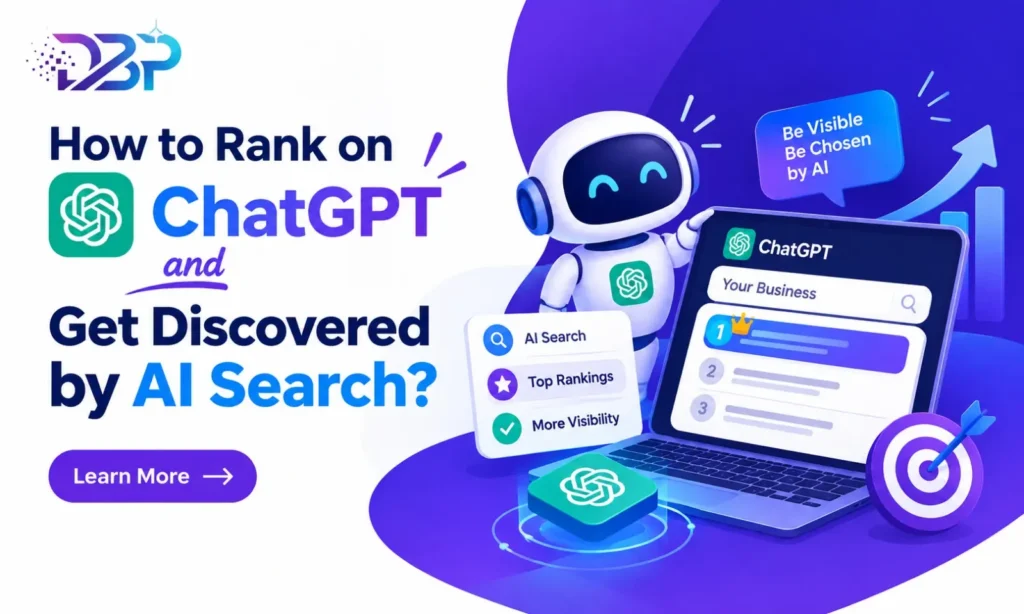
How to Rank on ChatGPT and Get Discovered by AI Search?
The search experience is evolving. For many years, people have been approaching search engines by asking a very simple question: “Where should I search for that?” Today, many people are starting to ask AI assistants an even more straightforward question: “Who can solve this problem? Or How to Rank on ChatGPT “
Rather than searching blue links, people can start asking ChatGPT and similar AI-driven search engines for recommendations, comparisons, explanations and solutions to their problems in natural conversation.
This evolution doesn’t imply that search engines and SEO will lose importance and significance. On the contrary, it will be expanding. The path will be increasingly shifting from:
Traditional SEO → AI Search Optimization → AI Visibility
Now, not only should companies consider how high their websites rank in search results but also how good they explain their expertise, services and brand to get into AI-driven answers. People asking how can businesses appear in ChatGPT search can think about providing authority, relevance content, strong brand signals, and trustworthy digital footprint for AI to find and understand easily.
Current keyword research reflects that. The interest in terms such as AI search optimization, AI visibility, LLM SEO, ChatGPT SEO and generative engine optimization is growing. Getting to know this evolution and its implications earlier can be very useful for developing a proper discovery strategy.
What Is AI Search Optimization and Why Does It Matter?
Optimizing AI Search involves making the website, the brand, and its information more easily discoverable, understandable, and usable by AI-enabled search engines when providing answers to queries made by the users. Classic SEO primarily revolves around:
- Search engine ranking
- Keywords
- Organic clicks
- Search engine results page
- Web traffic
AI-enabled search engines provide more visibility channels with:
- Direct answers
- Sources
- Mentions
- Entities
- Contextual information
- Recommendations
- Questions in a conversational manner
The key difference lies in how information is provided to the users.
A normal Google search for any service will give out ten links. In an AI-powered search, however, there would be an explanation provided along with the comparison of different methods of approach to the topic and even mention of some relevant websites or brands in the answer.
For instance, ChatGPT Search can conduct a web search for up-to-date information and give answers with references to sources. Firms which need to understand how to optimize a website for AI searches can concentrate on valuable content, good technical SEO, authority on topic, and brand information.
This poses a new problem to companies. It is still beneficial to rank well for one specific keyword, but today companies have to establish sufficient levels of relevance and credibility to be recognized through more diverse queries. Companies that are already conducting SEO campaigns, therefore, do not have to rethink their approach; they have to broaden it.
How Is ChatGPT Changing the Way People Search?
In the conventional form of search, short keyword phrases are often used.
A person may type:
“best digital marketing agency”
When using conversational AI, the same user may ask:
“What digital marketing agency can help a startup to get qualified leads using SEO and PPC?”
The difference lies here.
The latter is a question that has a lot more information regarding the type of firm, objectives, services required and desired result.
Such AI systems are built to understand such extra information and answer not just a small keyword phrase.
As per Google, users interacting with AI search experiences are asking more lengthy and detailed questions and even follow-up questions. This suggests that businesses need to know the entire question being asked by their customers before going ahead with a service provider.
Why Are Conversational Queries Important for Businesses?
Conversational search provides possibilities in the following categories of searches:
Long-tail Searches:
“How does a small firm enhance local SEO without raising its budget for advertising?”
Problem-Based Searches:
“My website is getting traffic but not any qualified leads. Why?”
Comparison Searches:
“Which should I choose: SEO or PPC for my upcoming ecommerce store?”
Recommendation Searches:
“Who can handle SEO, PPC and conversion optimization services?”
Local and service Searches:
“What digital marketing agency helps my Dubai business get more local leads?” These searches provide much greater insight into users’ intent.
Firms that provide valuable information to users on these everyday searches increase their odds of getting found through conventional and conversational AI searches.
Can Traditional SEO Still Help Businesses Appear in AI Search?
Yes.Classic SEO is still one of the most critical bases for AI search visibility. Organizations need to be wary of arguments which might make them believe that ChatGPT, AI Overviews, or generative search have made SEO obsolete. In reality, the present Google guidelines for generative AI search state that conventional SEO is still important because Google’s generative functions are built on the same Search ranking and quality systems.
The SEO basics consist of:
- Crawlable and indexable site
- Quality content
- Targeted keywords
- Logical linking
- Authoritative links
- Technical SEO
- Site structure
- Good page experience
- Structured data
- Topical expertise
This list of factors helps search engines discover and interpret the content. In terms of Google AI capabilities, for example, a webpage usually must be indexed and eligible to show up in Search in order to be shown as an anchor in AI results.
Traditional SEO in itself is not enough as a total solution for AI visibility. The organization will have to examine whether its content has an answer to the customers’ questions, whether there is consistency in their brand messaging, whether other reliable sources speak about them, and whether their expertise shines through. EO is not going away, but it is just one aspect of a bigger strategy of online discovery. Understanding how does SEO work with AI search can be answered by understanding how effective SEO enables AI to identify, understand, and trust the content on websites.
How Does AI Search Decide Which Businesses and Websites to Mention?
There is no publicly available universal “ChatGPT ranking algorithm” that businesses can follow to guarantee a particular placement. In fact, AI-generated recommendations can vary between prompts and responses, which is why businesses should think about visibility rather than trying to achieve a conventional “number one ChatGPT ranking.”
Several areas are nevertheless worth strengthening.
Content Relevance
Does the page directly address what the user wants to know? A detailed page answering a specific business problem may provide more useful context than a generic service page containing broad marketing claims.
Topical Authority
Does the website consistently demonstrate knowledge about its core subject? A company offering SEO services, for example, can strengthen topical depth through technical SEO guides, keyword research content, local SEO resources, case studies and industry-specific strategies.
Brand Recognition
A brand’s digital presence extends beyond its website. Relevant mentions across reputable publications, directories, professional platforms and other trustworthy sources can help establish broader recognition.
Clear Entity Information
Search systems should be able to understand:
- Who the company is
- What it offers
- Which industries it serves
- Where it operates
- What expertise it has
- Content Structure
Heading clarity, succinct explanation, good examples, and logically organized pages make it easy for both humans and computers to understand information.
Trust and Evidence
Fresh facts, real-world examples, authoritative sources, expert commentary, and business transparency can improve credibility. These techniques can help with visibility, but not any one of them is to be promoted as a secret recipe for ChatGPT success.
What Is the Difference Between SEO, GEO, AEO, and LLM SEO?
With the development of AI search, there have been some new terms in optimization.
Approach | Main Focus |
SEO | Improving visibility within traditional search engines and search results |
GEO | Improving visibility within generative and AI-powered search experiences |
AEO | Structuring information so it can effectively answer user questions |
LLM SEO | Improving discoverability in search and discovery environments powered by large language models |
These terms are useful, yet sometimes it may be hard to distinguish the difference between them.
- Search Engine Optimization (SEO) is still a broader term.
- Generative Engine Optimization (GEO) often refers to techniques that aim at making content more visible in the answers generated by the generative AI.
- Answer Engine Optimization (AEO) usually means optimizing for direct and structured answers to questions.
- LLM SEO refers to the visibility of content in search experiences powered by large language models.
Terminology is developing. For example, Google mentions such terms as GEO or AEO, yet at the same time, some of the key practices in generative search optimization are still considered part of SEO.
There also are some trends in keywords where people are looking for LLM SEO, ChatGPT SEO, AI search optimization and GEO vs SEO separately.
For businesses, it is much more important to have useful and trustworthy information available for their customers where they look for it.
How Can Businesses Optimize Content for ChatGPT and AI Search?
It is not necessary for businesses to reword each individual page for AI purposes.
Instead, companies must strive for better clarity and comprehensiveness in addressing customers’ needs on the website.
1. Answer Customers’ Needs
Make sure that content addresses issues which customers have in mind when calling or contacting the company by email and discussing the products or services during sale talks and consultations.
Instead of writing only:
- “SEO Services”
- address such queries as:
- “How long will SEO take for a new website?”
or:
“Should a local business choose SEO or Google Ads first?”
2. Use Clear Question-based Headings
The headings that are naturally oriented towards asking questions could be:
- What is…?
- How does…?
- Why does…?
- Which…?
- When should…?
3. Give Direct Answers
Do not make visitors read five paragraphs in order to get the answer to their query. Simply give the answer to the question first and then provide more detailed information afterwards.
4. Develop Deeper Topics
Don’t publish standalone articles without any kind of plan. Create topic clusters on related topics. For instance,
SEO > Technical SEO > Local SEO > Keyword Research > AI Search Optimization > Content Strategy
This allows you to demonstrate your expertise in the topic in general, and not just on a single keyword.
5. Provide Support for Your Information
Provide supporting evidence in the form of statistics, examples, case studies, first hand experience and even expert opinions wherever possible. Google’s latest AI search guidelines are especially focused on providing unique and valuable information that is not commoditized.
6. Keep Business Information Constant
Companies’ names, services, location, and descriptions should stay correct on websites, profiles, and directories.
7. Update Important Information
AI optimization for searches is not a one-time process. Update pages that contain important information when there is a change in services, stats, products, or customer behavior.
How Can SEO Improve a Brand's AI Visibility?
AI visibility is used as a term for general visibility of the brand, website, product or expertise in the context of AI-enabled search experiences. SEO can help achieve this visibility via the following chain of actions:
Search Visibility → Content Discovery → Authority → Entity Understanding → Possible AI Citation/Mention
Effective SEO will help achieve better chances of discovering the right pages and understanding their meaning. This will require developing:
- Topic Authority
- Backlinks of high quality
- Unique content
- Brand mentions
- Digital PR
- Service pages
- Structured data
- Business information consistency
- Industry-related resources and information
Think about a company whose site contains nothing but a generic homepage.
Now think about another company with clear service pages, topic guides, unique case studies, consistent profiles, industry mentions and answers to customer questions.
The second company gives much more opportunities for understanding its products/services and when to use them. Present 2026 keyword research done for this plan estimates “AI visibility” as being searched around 3,300 times per month with a keyword difficulty of 29.
The very fact that there is such demand speaks to how fast this concept is catching on in search marketing discussions.
What Should Businesses Do to Get Mentioned in ChatGPT?
Businesses asking how to get your website on ChatGPT need to first know about the following key difference:
ChatGPT doesn’t work just like a typical search results page, which means that businesses cannot ensure a set ranking or placement on it.
A better aim would be making it more likely that the brand will get mentioned by those looking for answers related to their expertise. Businesses should try to:
- Create high-quality and unique content
- Provide highly specific answers to customers’ questions
- Ensure correct brand/business information
- Gain credible mentions from outside sources
- Publish unique insights
- Maintain accurate information about their company
- Become a topic expert
- Create comparative content
- Publish problem-solving resources
- Improve online reputation in general.
Unique content can be especially useful.
A company that produces its own observations of the industry, customer insights, benchmarks, methodology, or case studies will produce content that is not going to be just duplicated from hundreds of pages that are almost identical.
It goes well with modern SEO advice that stresses unique and valuable content, rather than mass-produced content that is not unique at all.
Moreover, keyword research shows that “how to rank on ChatGPT” has much lower search volume and search difficulty, which makes it a perfect long-tail keyword.
How Should Local and Service Businesses Prepare for AI Search?
AI search visibility is not just for major publishers or ecommerce companies. A local or services company must have an easily identifiable and consistent digital presence. Some examples of this are:
- Google My Business listing
- Local SEO
- Consistent NAP data
- Service specific landing pages
- Location landing pages
- Customer feedback
- FAQs
- Local citations
- Industry listings
- Case studies
- Brand mentions
For instance, a digital agency serving multiple regions shouldn’t just rely on having a homepage that says that they provide marketing services.
A website should provide information about each service that it offers, industries it works within, geographic locations that it serves, skills and experience that it brings to table. Location-based information can also assist in identifying the whereabouts of the company.
It’s as simple as that:
The company needs a comprehensible digital presence, not just an optimized homepage. With more and more contextual search becoming the trend, consistency in information from multiple reliable sources could gain importance.
What SEO Mistakes Can Reduce AI Search Visibility?
There are several common mistakes that might limit visibility regardless of whether it is achieved through traditional and/or AI-driven search engine methods.
Publication of AI Generic Content
Creation of content via AI does not guarantee the latter to be useful. The creation of hundreds of pages that just copy-paste the same information is not very valuable either. This issue is addressed by Google guidelines, which explicitly discourage scaled AI-based content without any value to users.
Keyword Stuffing
It does not add much if you repeat “AI search optimization” twenty times on one page. Natural language and comprehensive coverage of the subject is more valuable than keyword stuffing.
Failure to Consider Brand Authority
Visibility through AI does not apply only to information on your website. It could also involve external recognition and references.
Creation of Thin Content
Pages that have several generic paragraphs without any examples or special information do not have much value.
Technical SEO Oversight
Content still has to be readable and comprehensible.
How Can DBP Agency Help Businesses Adapt to AI Search?
With the evolution of search, businesses require more than just a bunch of tactics for rankings. A cohesive digital strategy is needed.
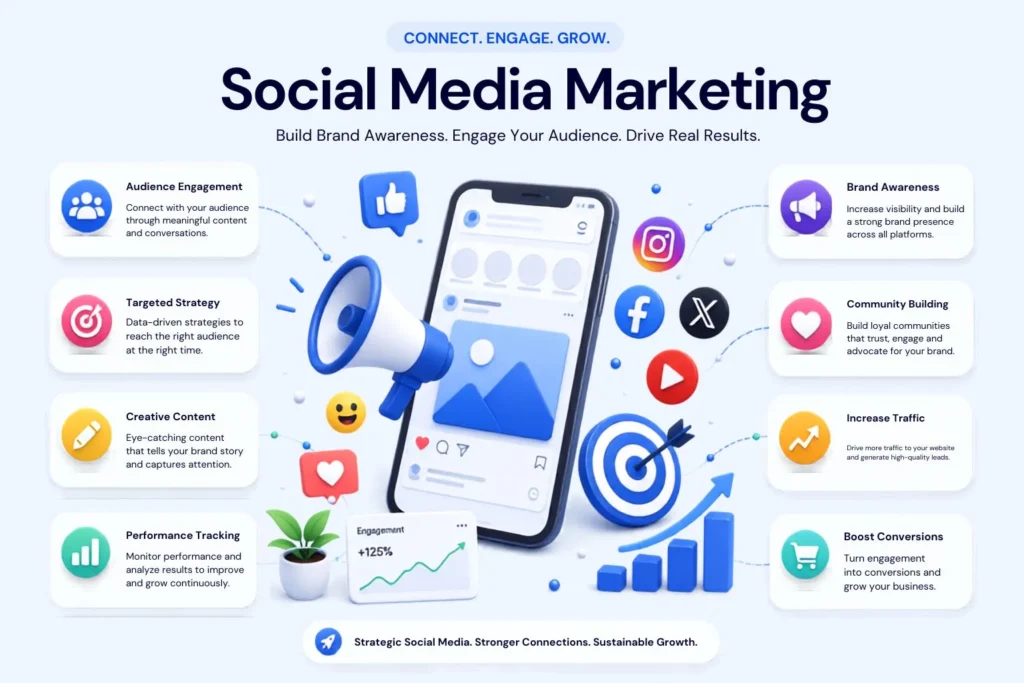
DBP Agency can assist companies with building a robust digital base for visibility on conventional search, paid search, social media marketing and new AI driven search. This could involve:
- SEO Strategy
- Technical SEO
- Content Marketing
- Keyword Research
- Search Visibility
- PPC Advertising
- Social Media Marketing
- Web Development
- Conversion Optimization
- Brand Visibility
Technical optimization would ensure that search engines index relevant pages while content marketing ensures expertise in the topic and PPC targets high-intent visitors instantly. Web development and conversion optimization make sure that this visibility leads to tangible results in the form of enquiries or sales.
The goal is not to claim that any business can rank “#1 in ChatGPT”. Rather, DBP Agency can help businesses develop SEO, content, authority and digital presence which will make them visible in evolving searches.
What Will SEO Look Like as AI Search Continues to Grow?
SEO is going to keep evolving as users continue to get more conversational about how they look for information. This is likely to lead to:
- More conversational queries
- More AI answers
- More zero click search
- The importance of brand mentions
- The continued relevance of traditional rankings
- An increased importance of originality
- Better entity recognition
- Multichannel discovery
The relevance of traditional rankings won’t disappear overnight.
Search engines still need websites, content, information and authority in order to generate their results.
On the contrary, companies may be expected to look at visibility differently. Success will increasingly depend on discoverability through the process of customers searching for companies through Google, using AI assistants, comparing companies, researching brands on social media or business sites and so on.
SEO is evolving from page by page optimization for the rankings into creating a complete digital presence for:
Discoverability + Understanding + Trust + Authority + Visibility
Final Thoughts
ChatGPT is not going to make SEO go away. On the contrary, it will help in broadening the scope of things that need to be accomplished through search optimization. Companies that want to prepare themselves for the future of search need to consider a combination of:
Technical SEO + Quality Content + Topical Authority + Brand Visibility + User Intent + AI SEO
And there is no guaranteed way to be ranked by ChatGPT, and companies should be careful about those who promise such shortcuts.
The better path is to become a valuable, authoritative, and clear-to-understand resource in your industry. DBP Agency can help your company achieve this through the means of SEO, content marketing, paid advertising, website development, and other digital visibility tools.
Frequently Asked Questions

1. How would SEO benefit companies to be featured in ChatGPT?
The use of SEO allows for optimizing website pages, quality of content, topic authority, and general online presence of any organization. Crawlable pages, high-quality content, legitimate backlinks, and relevant business information may contribute to signals that make an organization visible on the internet. However, SEO will not ensure that any specific company will be mentioned in ChatGPT.
2. What is AI Search Optimization?
AI Search Optimization is the technique of improving content and online presence of any organization to allow for better discovery, interpretation, and possible mentioning of that data by AI-driven search technology. The technique includes all the components of SEO and answers, authoritative topics, credible information, and brand signals.
3. Is it possible to rank a website in ChatGPT?
In a way that Google Search ranks a page at a set position? ChatGPT answers may depend on different criteria, such as the question asked, its context, available information, etc. Hence, companies should work on improving their AI presence instead of trying to achieve a consistent first place in ChatGPT.
4. How can I increase my AI search presence?
It all begins with improving your overall digital presence. Create quality content, answer customer-specific queries, implement SEO, develop topic authority, get credible mentions, have accurate business information, etc.
5. Does ChatGPT affect the relevance of SEO?
Yes. It does. SEO is still very important. Conventional SEO ensures that websites are crawlable, discoverable, and understandable, while at the same time increasing content quality and authority. Google says that the foundational best practices of SEO still hold true for its generative AI search experiences.
6. What is the difference between SEO and GEO?
The main distinction between SEO and GEO (generative engine optimization) lies in the fact that while SEO is a broader notion that involves improving visibility in search engines, GEO, on the other hand, implies improving visibility in generative AI search experiences.